

ABH: 73.128
BF: 2360
Family: Noctuidae
Subfamily: Xyleninae
Taxon: Amphipoea oculea
Authority: (Linnaeus, 1761)
Vernacular: Ear Moth

Account: Common in unimproved grassland, woodland rides, marshes, moorland, saltmarshes and gardens throughout much of the British Isles, a species of conservation concern under the UK Biodiversity Action Plan Ear Moth is very like other Amphipoea species and those from northern Britain at any rate can only be identified with certainty by reference to the genitalia (MBGBI Vol 10). In southern England, it may be confused with Saltern Ear A. fucosa, however Saltern Ear is generally paler and longer-winged. Larva feeds within stems and roots of various grasses, including Annual Meadow-grass and Tufted Hair-grass, and herbaceous plants such as Butterbur, over-wintering as an egg.
Wingspan: 28 — 34 mm
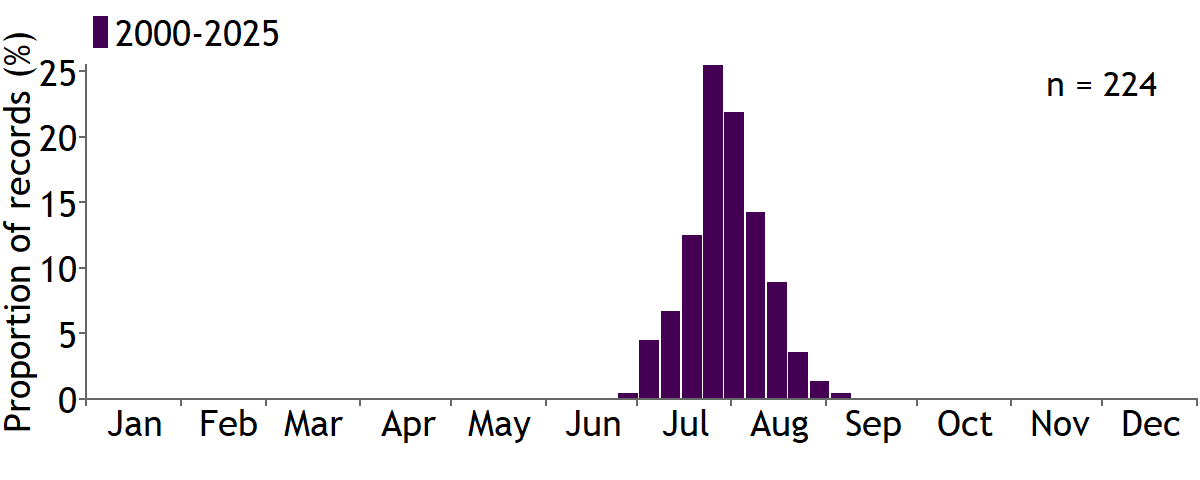
Surrey Flight Period: 28 Jun (2009) — 6 Sep (1996)
Foodplant: Deschampsia cespitosa (Tufted Hair-grass), Gramineae., Petasites hybridus (Butterbur), Polyphagous.
Status: Least Concern (LC)
UK BAP: BAP(R)
WCA:
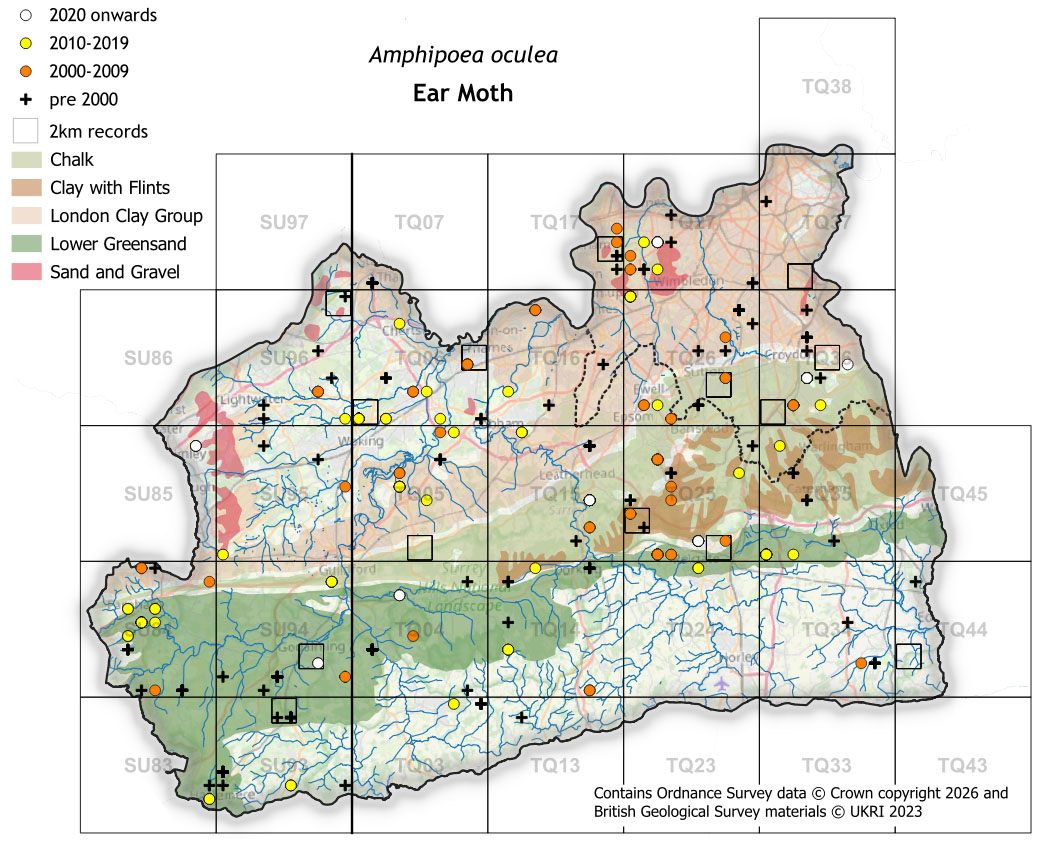
Click here to view the full geology map of Surrey.
Verification Grade: 4 — ️‼️Dissection required️‼️
Further Information: https://www.ukmoths.org.uk/species/amphipoea-oculea/
* Based on adult records only.
Records: 494
Individuals: 163
Earliest Year: 1840
Latest Year: 2025