

ABH: 73.234
BF: 2229
Family: Noctuidae
Subfamily: Xyleninae
Taxon: Dasypolia templi
Authority: (Thunberg, 1792)
Vernacular: Brindled Ochre

Account: Local on grassland, sea cliffs, sand-dunes, upland grassland, moorland and sand-dunes throughout much of Scotland, northern England and south-western England, predominantly coastal, a species of conservation concern under the UK Biodiversity Action Plan. The species is almost entirely coastal in southern England, but it occurs also inland from the north Midlands northward; in the southern part of the range it is always found in association with rocks, but further north it is more generally distributed, and in Scotland becomes progressively more common from south to north, abundant in Orkney and Shetland (MBGBI Vol 10) Larva feeds on Hogweed and Wild Angelica.
Wingspan: 40 — 56 mm
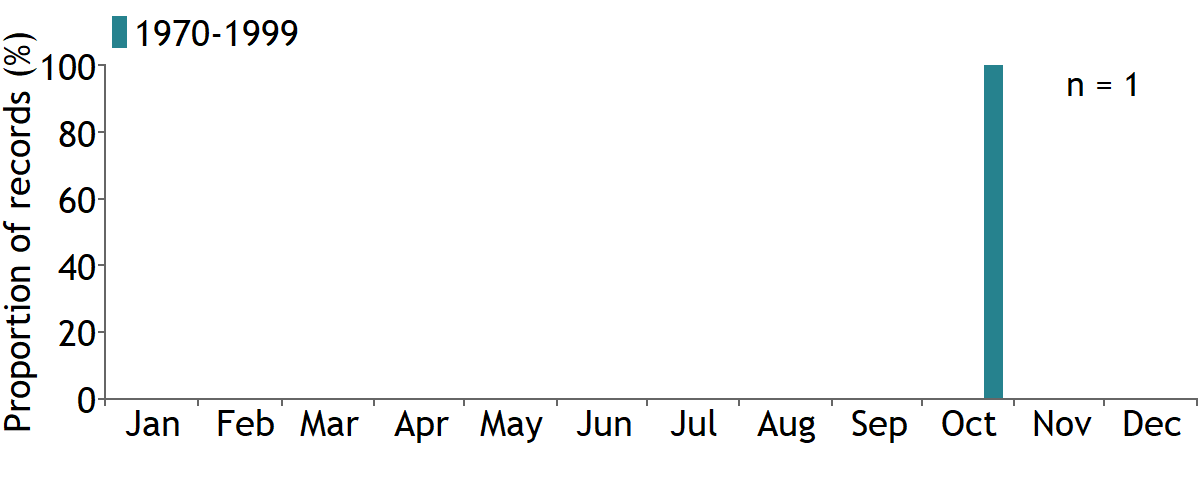
Surrey Flight Period: —
Foodplant: Angelica sylvestris (Wild Angelica), Heracleum sphondylium (Hogweed).
Status: Near Threatened (NT)
UK BAP: BAP(R)
WCA:
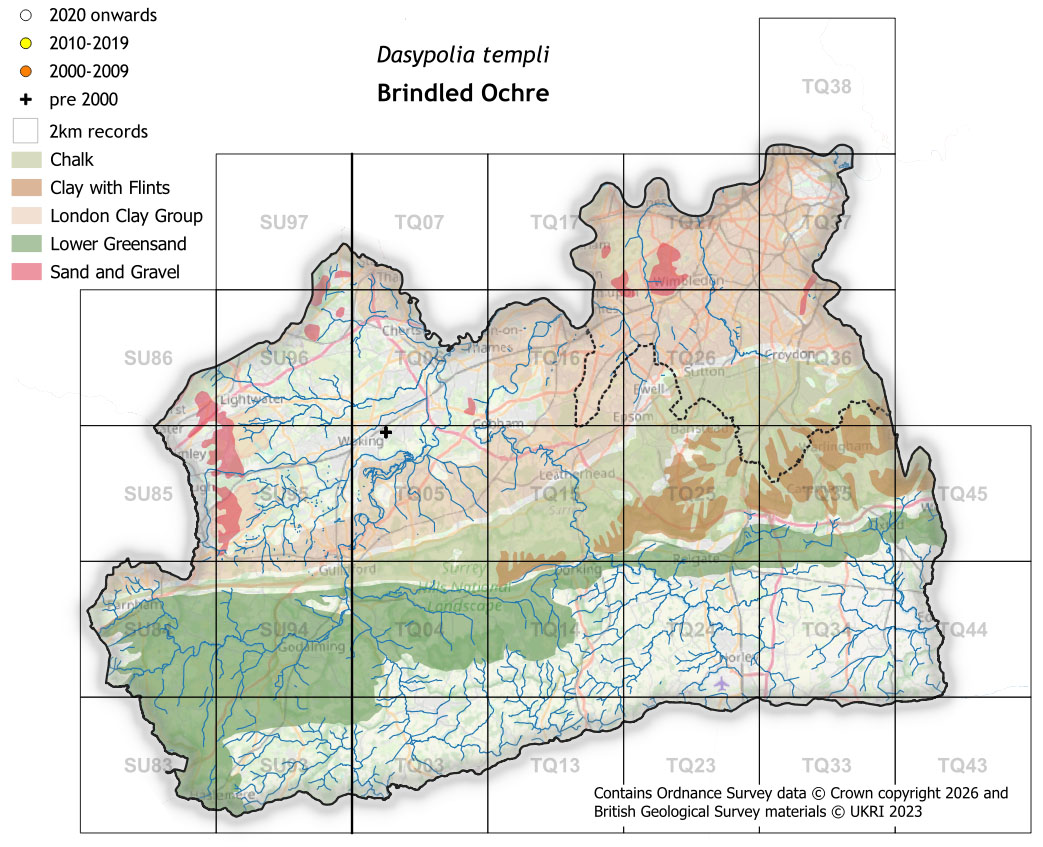
Click here to view the full geology map of Surrey.
Verification Grade: 1 — Relatively easily identified 👌
Further Information: https://www.ukmoths.org.uk/species/dasypolia-templi/
* Based on adult records only.
Records: 1
Individuals: 1
Earliest Year: 1970
Latest Year: 1970