

ABH: 70.248
BF: 1927
Family: Geometridae
Subfamily: Ennominae
Taxon: Lycia hirtaria
Authority: (Clerck, 1759)
Vernacular: Brindled Beauty

Account: Common in broad-leaved woodland, scrub, hedgerows, parks and gardens throughout England, Wales and southern Scotland, a species of conservation concern under the UK Biodiversity Action Plan The male is most likely to be confused with Pale Brindled Beauty Phigalia pilosaria, from which readily distinguished by the prominent black cross-lines of Brindled Beauty. Larva feeds on various broad-leaved trees and shrubs, including Birch, Hawthorn, Alder, Sallow, Oak, Elm and Lime, over-wintering as a pupa.
Wingspan: 42 — 52 mm
Surrey Flight Period: 25 Feb (2000) — 31 May (2003)
Foodplant: Polyphagous.
Status: Least Concern (LC)
UK BAP: BAP(R)
WCA:
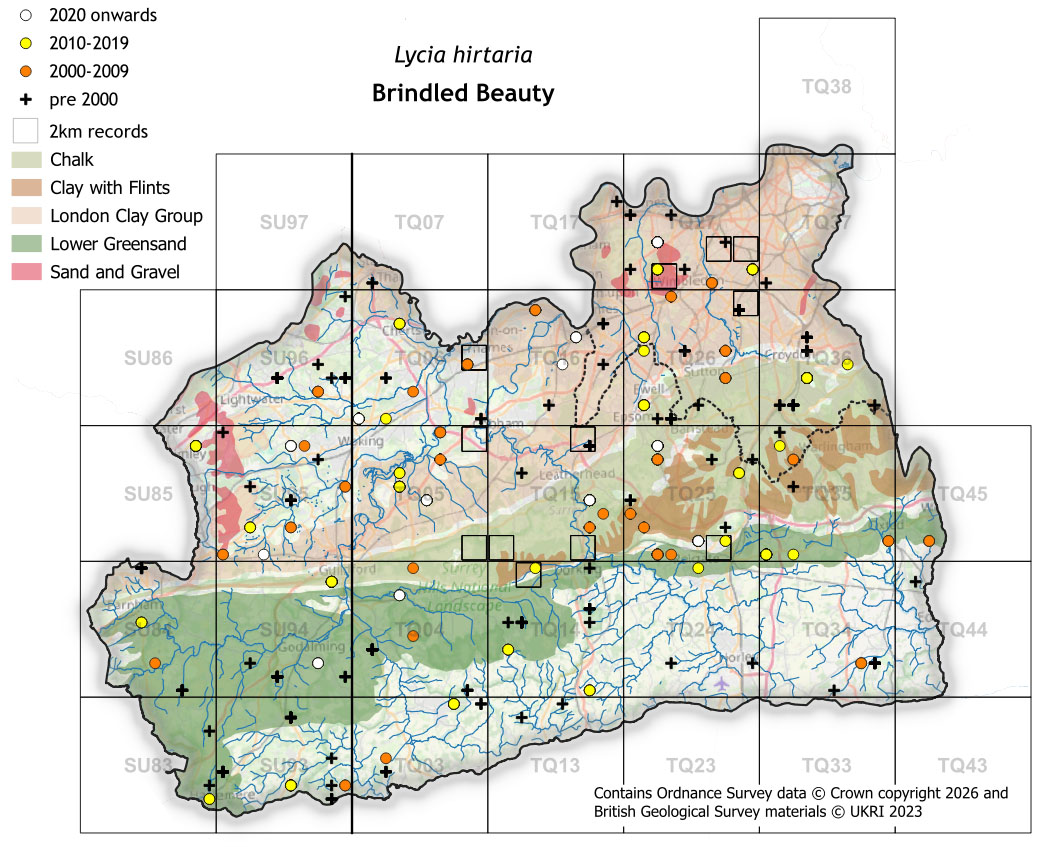
Click here to view the full geology map of Surrey.
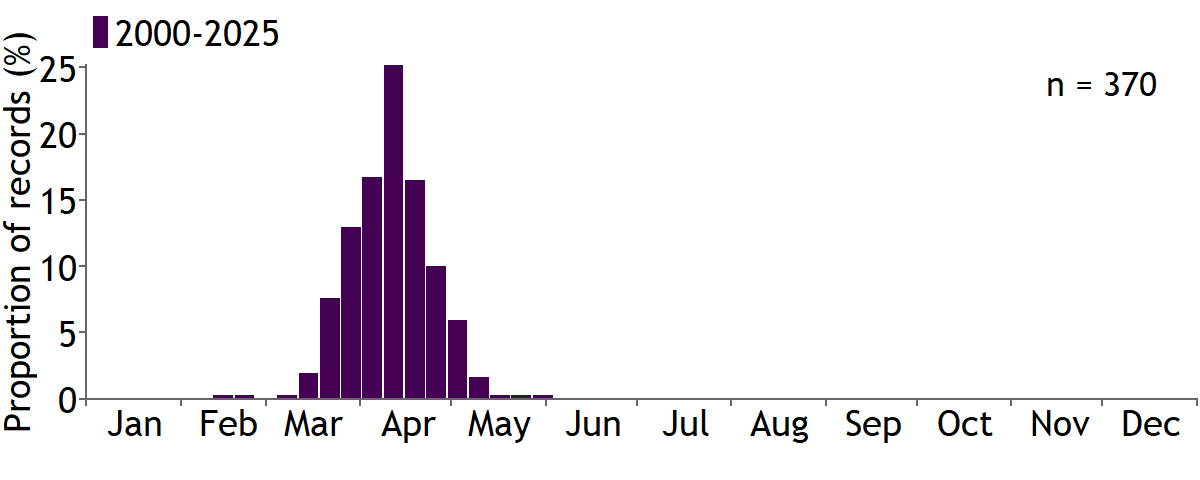
Verification Grade: 1 — Relatively easily identified 👌
Further Information: https://www.ukmoths.org.uk/species/lycia-hirtaria/
* Based on adult records only.
Records: 713
Individuals: 488
Earliest Year: 1904
Latest Year: 2025