

ABH: 52.002
BF: 370
Family: Sesiidae
Subfamily: Sesiinae
Taxon: Sesia apiformis
Authority: (Clerck, 1759)
Vernacular: Hornet Moth

Account: Nationally scarce (Nb) in open areas with scattered trees in central and southern England, though also recorded from Durham and north and south Wales; local in Ireland with scattered records from a few eastern and southern counties (MBGBI Vol 2) Day-flying. Mainly recorded in the larval form, but the early stages are difficult to find during the winter months and the species' true distribution remains largely unknown; the use of the HOR pheromone lure is expanding our knowledge of the true distribution of this spectacular insect. Distinguished from the similar Lunar Hornet Moth by the yellow head and tegulae.Larva feeds within wood of Black Poplar and other poplars, over-wintering two or three times.
Wingspan: 33 — 46 mm
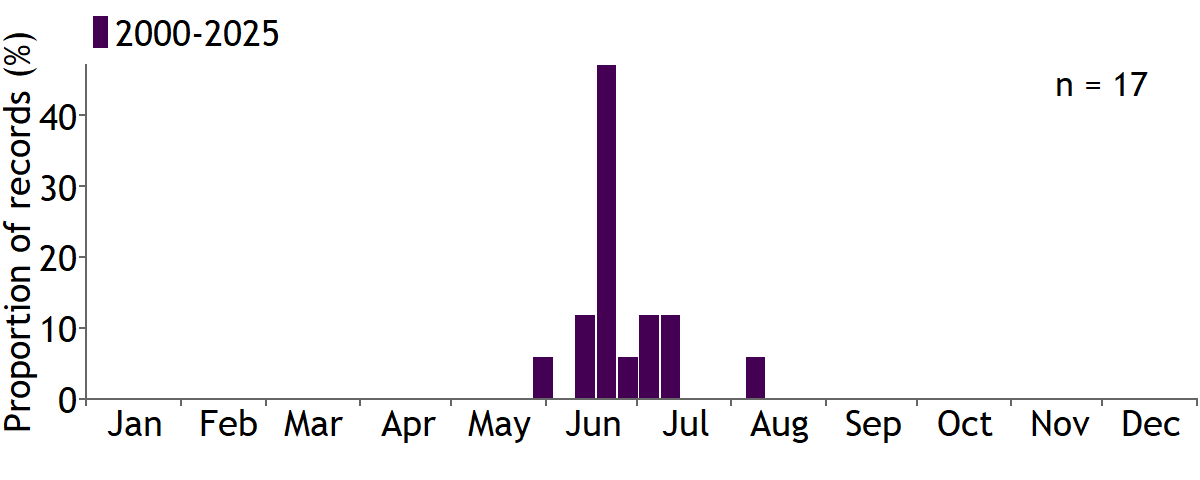
Surrey Flight Period: 30 May (2022) — 26 Jul (1996)
Foodplant: Populus nigra.
Status: Least Concern (LC)
UK BAP:
WCA:
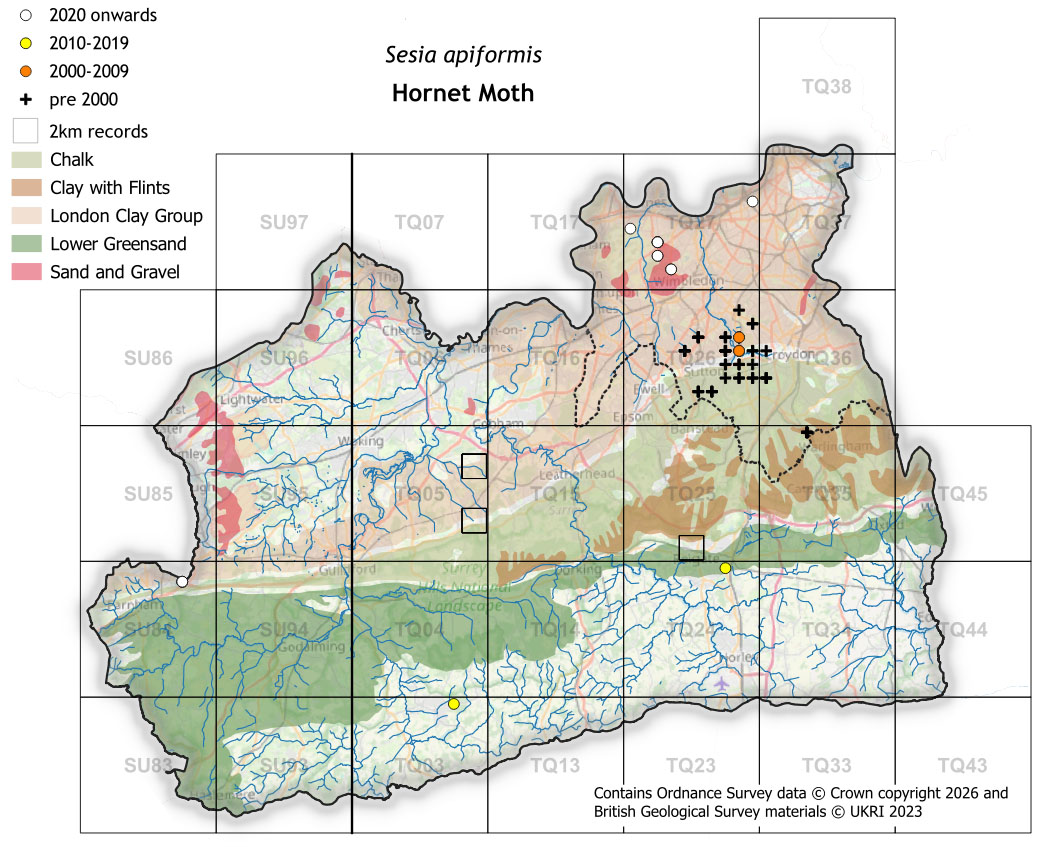
Click here to view the full geology map of Surrey.
Verification Grade: 2 — Care needed to identify, an image may be required 🤔
Further Information: https://www.ukmoths.org.uk/species/sesia-apiformis/
* Based on adult records only.
Records: 92
Individuals: 507
Earliest Year: 1909
Latest Year: 2024